
A red oil pressure light means the engine has lost oil pressure, and you should stop driving now. Pull over somewhere safe, switch the engine off and check the oil level before you do anything else.
If the oil is low, a top-up often fixes it. If the oil is full, or the light comes back after a restart, the car needs a tow, not another mile.
What the light actually measures
The red light reports pressure, not quantity. On many cars it's wired to a simple switch that oil pressure holds open. When pressure drops too low, the switch closes and the light comes on, as Rob Siegel explains for Hagerty.
Normal pressure rises with engine speed. Siegel's rule of thumb is that "oil pumps deliver oil at a little more than 10 psi per thousand engine rpm." That works out to roughly 10 to 20 psi at idle and 40 to 50 psi at 4,000 rpm. Hot oil is thinner and reads lower.
So a light that comes on at a hot idle and goes out when you rev isn't a false alarm. Pressure is marginal at the speed where it matters least.
The red oil can sits with the other stop-now lights in our dashboard warning lights guide. Here we go further into the oil light alone.
Red vs amber: two different oil lights
Some cars have two oil lights, and they mean different things. Volkswagen's warning light page shows a red oil can for oil pressure that is too low, and an amber oil can with a wavy line for low oil level. A flashing amber one on a VW means an oil system fault.
Light | What it means | Can you drive | Source |
|---|---|---|---|
Red oil can | Oil pressure too low | No. Stop and switch off | |
Amber oil can, solid | Oil level too low, often a quart or two | A few miles, then top up | |
Amber oil can, flashing (VW) | Oil system malfunction | Get it to a shop soon | |
"Change oil soon" message | Service reminder only | Yes. Book an oil change |
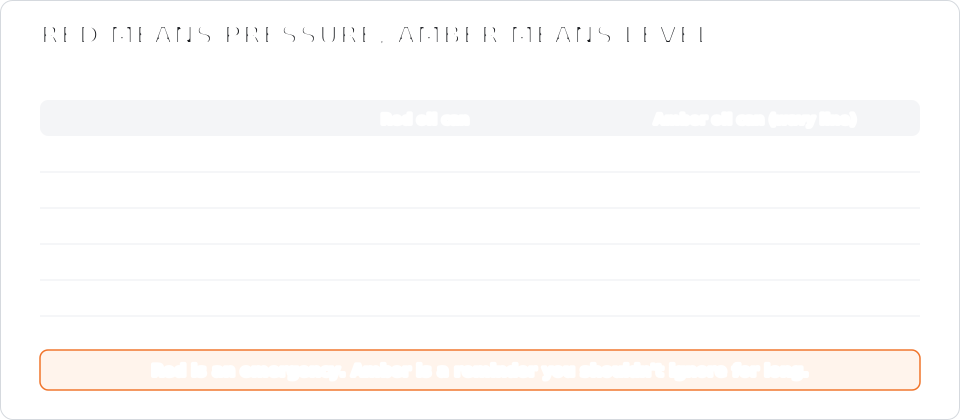
Toyota's owner pages use the same color logic. Red marks a condition that needs immediate attention, and low engine oil pressure is the example they give.
Causes, from most to least common
Low oil is the first thing to rule out. AAA says the cause may simply be too little oil, and notes it can take two or three quarts to reach the operating level. At the other end, Siegel says full failure of the oil pump is pretty rare.
Cause | How you'd spot it | Typical fix and cost |
|---|---|---|
Low oil level | Dipstick at or below the add mark; light flickers when braking or cornering | Top up, then find the leak or the burning |
External leak | Drips or puddles, burning smell, though a leak can show no puddle | Oil pan gasket: $583 to $798 |
Faulty sensor or wiring | Oil full and clean, engine sounds normal, light still on | Oil pressure sensor: $207 to $261 |
Old, thin or contaminated oil | Milky, sludgy or fuel-smelling oil; change overdue | Oil and filter change |
Clogged pickup screen or stuck relief valve | Light at idle, sludge in the oil | Oil pan off; get a quote |
Worn oil pump | Ticking, whining, erratic readings | Oil pump: $1,631 to $2,179 |
Worn engine bearings | Flickers or stays on at hot idle, goes out with revs | Engine work or replacement |
The braking and cornering flicker comes from oil sloshing away from the pickup when the level is low, Firestone says. Firestone also lists fuel or moisture in the oil, which thins it and drops pressure, and notes that a leak can lower pressure even when there's no puddle under the car.
On the sensor side, Siegel describes two common faults. One is the warning wire chafing through and grounding on the body. The other is a sensor with a cracked housing that leaks oil. He also tells of a 1985 BMW whose flickering light traced back to the wrong oil filter.
If the oil keeps going low with no drips on the driveway, the engine may be burning it. Our guide to why a car burns oil covers the tests.
Can you keep driving with the oil light on
No. Not with the red light. Honda's owner's manual warns that running the engine with low oil pressure can cause serious mechanical damage almost immediately (Honda). Siegel's advice is to pull over at once rather than wait for the next exit.
RepairPal goes further: don't start the engine again until someone has confirmed the oil pressure, because running it can seize the engine.
The amber level light is different. Siegel says a level light comes on when you're a quart or two low, about the bottom of the dipstick. Driving a few miles to the next exit at that level is highly unlikely to kill the engine, he says, but check and top up as soon as it's safe.
What it costs
Most oil light fixes cost far less than ignoring the light. RepairPal's estimates, updated September 3, 2026, exclude tax and fees and don't adjust for your area.
Repair | Typical US cost | Source |
|---|---|---|
Oil pressure sensor | $207 to $261 | |
Oil pan gasket | $583 to $798 | |
Oil pump | $1,631 to $2,179 | |
Oil pump, Honda Civic | $1,175 to $1,482 | |
Oil pump, Toyota Camry | $2,140 to $2,970 | |
Engine replacement | $2,000 to $10,000 | ConsumerAffairs, May 2026 |
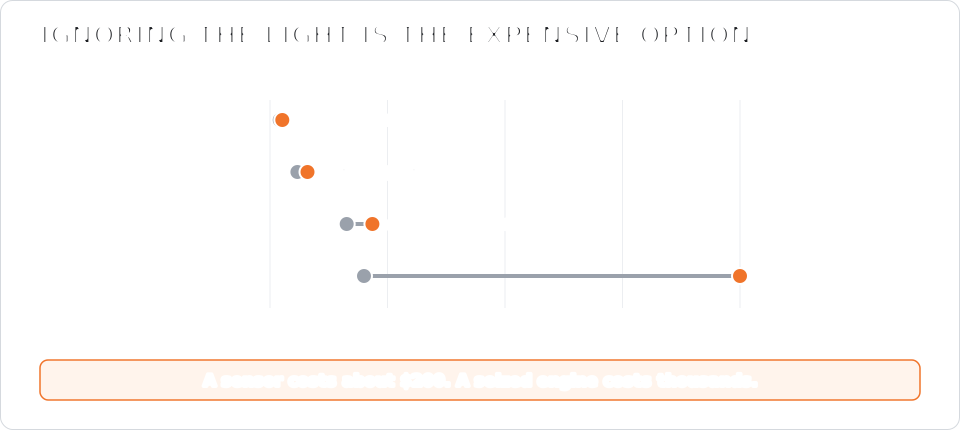
The pump is pricey because it's mostly labor. RepairPal puts labor at $1,152 to $1,691, since the oil pan has to come off. A good shop tests the sensor before it condemns the pump, and RepairPal describes that order: check the level, look for leaks, test the sensor, then suspect the pump.
The engine figure is the one to keep in mind. ConsumerAffairs puts a replacement at $2,000 to $10,000 depending on the engine and whether it's new, used or remanufactured.
What to do today
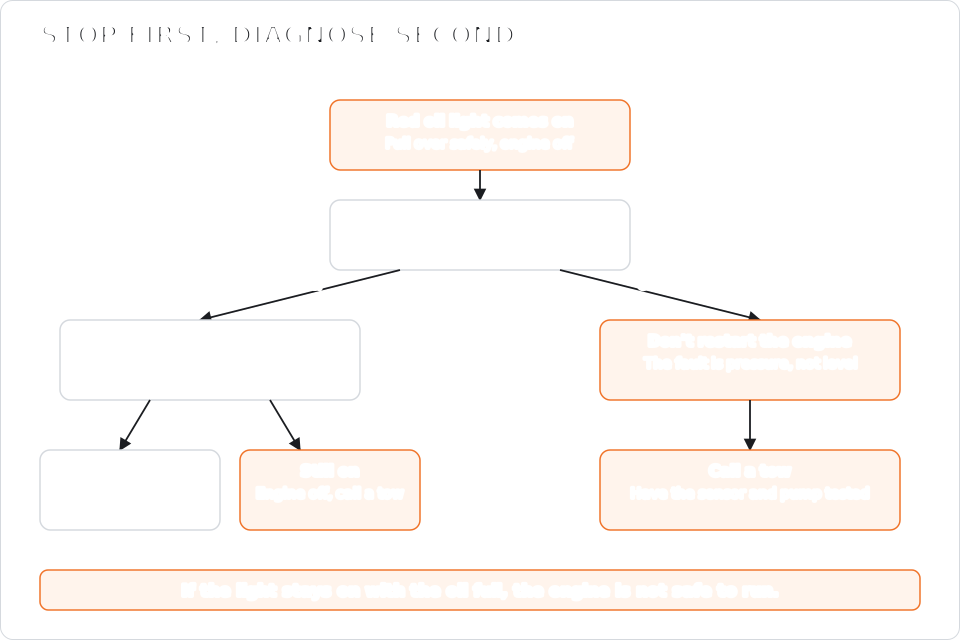
- Pull over as soon as it's safe, turn on your hazards and switch the engine off.
- Wait about three minutes, then check the dipstick on level ground. That's the wait Honda's manual gives.
- If it's low, add the oil grade from your owner's manual up to the full mark. Any brand of the right grade is fine in a pinch, as our piece on mixing motor oils explains. Don't overfill; too much oil causes its own problems.
- Restart and watch the light. Honda says that if the warning doesn't go off within 10 seconds, switch off and contact a dealer. AAA says the same about a light that returns for more than a couple of seconds.
- If the oil was full to begin with, don't restart. Call a tow and ask the shop to confirm the oil pressure with a gauge before replacing anything.
Common questions
Can you drive with the oil light on?
Not with the red one. It means low oil pressure, and Honda warns that damage can start almost immediately. A solid amber oil level light lets you drive a few miles to get oil.
Why is my oil light on but the oil is full?
Either the sensor or its wiring is faulty, or the engine really has low pressure from a clogged pickup, a worn pump or worn bearings. You can't tell which from the driver's seat. Have it towed and pressure-tested, since a sensor costs $207 to $261 and a guess can cost an engine.
What's the difference between the red and yellow oil light?
Red means oil pressure is too low. Yellow or amber, on cars that have it, means the oil level is low. VW uses exactly that split, and a flashing amber light on a VW means an oil system fault.
Why does my oil light flicker at idle or when I brake?
A flicker when braking or cornering usually means the oil is low and sloshing away from the pickup, according to Firestone. A flicker at a hot idle that goes away with revs can point to worn bearings or the wrong oil filter, as Siegel describes. Check the level first either way.
Sources
Sources are linked in the text. Main references: Hagerty, Honda owner's manual, AAA and RepairPal.
Featured image: Oil Pressure Gauge by therichbrooks, CC BY 2.0. Source


No comments yet